What Makes the Great Migration So Unique
The Scale and Movement of the Migration
Imagine standing on the edge of the Maasai Mara, the sun just rising, and the ground beneath you literally trembling. That’s not an exaggeration—it’s the sound of over two million wildebeest, zebras, and gazelles moving together in one continuous, instinct-driven journey. For German travelers used to structured itineraries and predictable schedules, the Great Migration feels almost unreal—like stepping into a world where nature writes its own rules.
The migration isn’t a single event; it’s a year-round circular movement across Tanzania’s Serengeti and Kenya’s Maasai Mara. Driven by rainfall and the search for fresh grazing, these animals follow a path that spans hundreds of kilometers. It’s not guided by leaders or maps—just instinct, memory, and survival.
What makes this movement so fascinating is its unpredictability. While there are general patterns, the exact timing depends heavily on weather conditions. One year, herds might arrive in Kenya in early July; another year, it could be late August. This uncertainty adds an element of anticipation that no fixed itinerary can replicate.
From a practical standpoint, this means German travelers need to plan carefully—but also remain flexible. Booking the right region at the right time can mean the difference between seeing scattered groups and witnessing massive herds stretching to the horizon.
It’s not just about numbers—it’s about motion. The constant flow of animals creates a living, breathing landscape that changes by the hour. You’re not just observing wildlife; you’re watching an ecosystem in motion, where every कदम matters.
Why It’s Called One of the Greatest Wildlife Shows on Earth
The phrase “Greatest Wildlife Show on Earth” gets thrown around a lot—but in this case, it’s not marketing hype. It’s a genuine reflection of the raw, unscripted drama that unfolds during the migration.
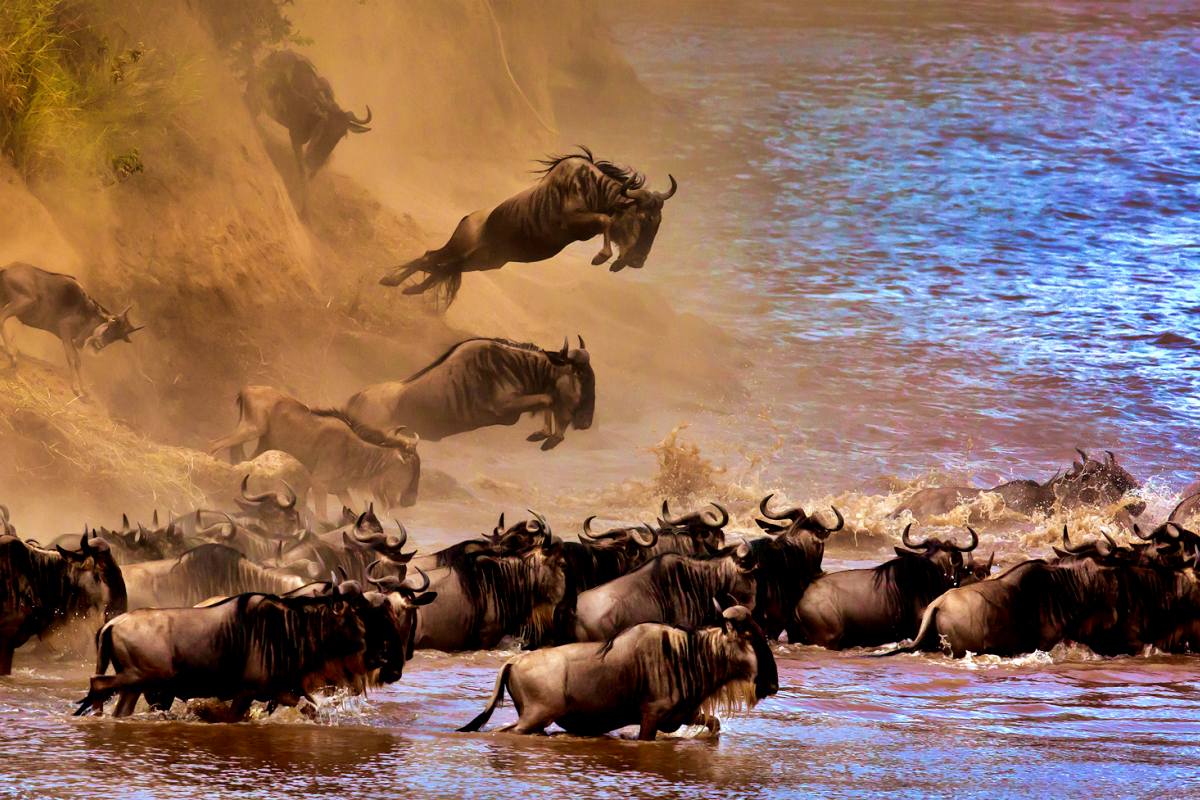
At the heart of it are the river crossings, particularly at the Mara River in Kenya. This is where the migration transforms from impressive to unforgettable. Thousands of wildebeest gather at the riverbanks, hesitating, sensing danger. Then अचानक, one jumps—and the rest follow. Within seconds, chaos erupts.
Crocodiles lie in wait beneath the surface, currents pull animals downstream, and plays out in real time. It’s intense, emotional, and sometimes difficult to watch. But it’s also a powerful reminder of nature’s balance—survival, risk, and renewal all happening at once.
For German travelers who appreciate authenticity, this is as real as it gets. There are no fences, no staged encounters—just nature unfolding exactly as it has for thousands of years.
But the spectacle isn’t limited to crossings. Predators follow the herds closely, leading to frequent sightings of lions, cheetahs, and hyenas. The abundance of prey creates a dynamic environment where something is always happening.
What truly sets the migration apart is its scale combined with unpredictability. It’s not a single highlight—it’s a continuous story with countless moments of tension, beauty, and surprise.
Watching it feels less like a tour and more like witnessing a natural phenomenon that you can’t fully control—but that’s exactly what makes it unforgettable.
When to See the Great Migration in Kenya
Month-by-Month Migration Breakdown
Timing your safari is the single most important decision you’ll make if your goal is to witness the Great Migration in Kenya. While the animals are constantly moving, their presence in the Maasai Mara follows a general seasonal rhythm that German travelers can use as a guide.
- January to March: The herds are mostly in Tanzania’s Serengeti الجنوب, where calving season takes place. This isn’t the best time to see them in Kenya, but it’s still an incredible period for predator activity.
- April to May: The long rains begin, and the herds start moving northwest. Travel can be more challenging due to muddy conditions.
- June: The migration begins to gather momentum, with large groups moving toward the western Serengeti.
- July to August: This is when the herds typically enter Kenya’s Maasai Mara. River crossings start to occur, making it one of the most sought-after periods.
- September: The migration is fully established in the Mara, with large herds spread across the reserve.
- October: The animals begin their journey back toward Tanzania as rains approach.
- November to December: The herds move south again, leaving Kenya behind.
For German travelers planning around work schedules or school holidays, late July through September is often the safest window. It offers the highest вероятность of seeing large herds and dramatic crossings.
But remember—nature doesn’t follow calendars. Flexibility and choosing the right location within the Mara can significantly improve your chances.
Best Time for River Crossings
If your dream is to witness a Mara River crossing, timing becomes even more critical. These crossings don’t happen on a fixed schedule—they’re spontaneous, driven by instinct and الظروف.
Generally, the best time is between late July and early September. During this period, herds gather along the riverbanks, sometimes for hours or even days, before finally making the leap. The anticipation alone can be electrifying.
Early mornings and late afternoons are often the most active times, but there’s no guarantee. You might wait patiently for hours, only for nothing to happen—or arrive just in time to witness a dramatic crossing within minutes.
This unpredictability is part of the experience. It teaches patience and rewards those willing to wait.
Choosing a camp near key crossing points—such as the Mara River באזור Talek or the northern Mara—can significantly increase your chances. Guides play a crucial role here, using experience and communication networks to track herd movements.
For German travelers used to precise planning, this might feel challenging. But that’s the beauty of it. The migration doesn’t operate on a schedule—it unfolds in its own time, and when it happens, it’s worth every רגע of waiting.
Where to Experience the Migration in Kenya
Maasai Mara National Reserve Overview
If you’re aiming to witness the Great Migration in Kenya, the Maasai Mara National Reserve is the undisputed epicenter. This iconic park, covering 1,510 square kilometers, is not just a wildlife sanctuary—it’s a living stage where over two million wildebeest, zebras, and gazelles perform their annual journey. For German travelers, it’s a safari destination that combines accessibility, infrastructure, and unparalleled wildlife density.
The Mara’s landscape is deceptively simple: rolling savannahs dotted with acacia trees, winding rivers, and open plains that seem to stretch endlessly. But within this simplicity lies a remarkable variety of habitats. From riverine forests that shelter hippos and crocodiles to grasslands where predators stalk their prey, the Mara offers diverse ecosystems packed into a compact area.
One of the park’s major advantages is its high concentration of wildlife during migration season. Because water is limited outside of rivers and permanent watering holes, animals cluster in predictable areas, making sightings both frequent and spectacular. This isn’t just good for photographers—it means that even a single day of safari can yield dozens of encounters with big cats, elephants, and iconic herbivores.
Another key feature is the integration of local Maasai communities. Many camps and lodges partner with the Maasai people, offering cultural experiences alongside wildlife adventures. Visitors get to learn about traditional customs, witness beadwork craftsmanship, and even enjoy local cuisine prepared in authentic ways. For German travelers who value cultural immersion as much as wildlife, this dual experience is a major draw.
Accessibility is another plus. The Mara is reachable via short flights from Nairobi or well-maintained roads for self-drive safaris. Airstrips are dotted throughout the reserve, allowing travelers to bypass long drives and maximize their time on safari. This convenience is especially helpful for German tourists who want to combine efficiency with a deeply rewarding wildlife experience.
In short, the Maasai Mara is more than just a park—it’s the heart of Kenya’s Great Migration, offering unparalleled opportunities to witness one of nature’s most awe-inspiring spectacles in comfort and style.
Best Camps and Viewing Areas
Being in the right place at the right time is essential for maximizing your migration experience. The Maasai Mara offers a range of camps and lodges that cater to different preferences, from luxury to mid-range to intimate bush camps.
Luxury Options: High-end lodges like Angama Mara, Mahali Mzuri, and Governors’ Camp offer private tents with panoramic views, gourmet dining, and personalized guides. They’re perfect for German travelers who prioritize comfort without compromising proximity to wildlife.
Mid-Range Choices: Camps such as Mara Serena, Keekorok Lodge, and Little Governor’s Camp balance affordability and quality. They often provide excellent game drives and community engagement experiences, making them ideal for families or small groups.
Prime Viewing Areas: The key to witnessing river crossings is positioning. The Talek River, Mara River near Musiara, and northern Mara are hotspots where herds often gather. Staying nearby increases your chances of observing dramatic crossings and predator interactions. Guides in these areas use years of local experience, combined with real-time updates from other camps, to track herd movements.
Bush Camps: For those seeking immersion, smaller tented camps within the Mara offer an unparalleled sense of connection with nature. Waking up to the sounds of lions and birdsong is an experience that can’t be replicated from more commercial lodges. For German travelers who love authenticity and adventure, this is often the highlight.
A practical tip: book early. Camps in prime locations fill up quickly during July–September, the peak migration season. Flexibility is less of an option here—securing accommodation well in advance is key to ensuring your safari aligns with migration movements.
Ultimately, the combination of strategic location, experienced guides, and suitable lodging can turn a safari from good to extraordinary. The Maasai Mara doesn’t just offer a view of the migration—it immerses you in the rhythm, suspense, and drama of one of the most incredible natural events on the planet.
Planning Your Migration Safari from Germany
Flights, Travel Routes, and Entry Requirements
For German travelers, reaching the Maasai Mara starts with efficient planning. Major airports in Frankfurt, Munich, and Berlin offer one-stop flights to Nairobi, Kenya’s main international gateway. Airlines like Kenya Airways, Lufthansa, and Emirates provide reliable connections, usually totaling 9–11 hours of travel time depending on layovers.
From Nairobi, you have two main options to reach the Mara:
- Domestic Flights: Several airlines operate small aircraft to airstrips within the reserve. Flight times range from 45 minutes to an hour, offering a quick, scenic approach to your lodge. This option maximizes your time in the Mara, which is crucial during peak migration periods.
- Road Transfers: Driving from Nairobi to the Mara takes roughly 5–6 hours, depending on conditions. Roads are generally well-maintained but can be rough during the green season (April–June). Self-drive safaris are possible, but guided transfers are often safer and more informative, especially for first-time visitors.
Entry requirements are straightforward. German citizens need a Kenya eTA (Electronic Travel Authorization) before arrival. The process is online, typically takes 2–3 business days, and requires a valid passport, flight information, and proof of accommodation. German travelers should also have travel insurance, vaccinations (including Yellow Fever if arriving from certain countries), and basic malaria prevention measures.
Timing flights is strategic. Arriving in the morning allows for a direct transfer or flight to the Mara, minimizing travel fatigue. It also gives you flexibility to start game drives the same day—a bonus when chasing unpredictable migration events.
Overall, reaching the Mara from Germany is relatively simple with careful planning. Knowing your routes, entry requirements, and timing considerations ensures that your safari experience starts smoothly and stress-free.
Booking Strategies and Lead Times
The Great Migration attracts thousands of international travelers each year, which means timing is everything when booking your safari. For German tourists, this requires advance planning:
- Peak Season (July–September): Book 6–12 months in advance to secure lodges in prime locations near river crossings. Last-minute bookings are risky and often expensive.
- Shoulder or Off-Peak Seasons (October–December, January–March): You can often book 3–6 months ahead, benefiting from lower prices and more lodge availability.
- Tour Operators vs Independent Planning: Working with reputable safari operators ensures you access the best camps, guides, and insider knowledge about herd movements. Independent planning is possible but requires research and flexibility.
Another tip is to combine accommodation types. For example, a few nights in a luxury lodge for comfort, followed by a couple of nights in a smaller bush camp for immersion, provides the best of both worlds.
German travelers should also consider flight flexibility. Migration timing can vary slightly each year due to rainfall and grass growth, so keeping flexible arrival and departure dates increases the chance of witnessing river crossings.
In essence, careful booking, strategic timing, and the use of experienced operators can dramatically increase the success of your migration safari, turning it from a potential once-in-a-lifetime opportunity into an unforgettable reality.
What You’ll Actually See on Safari
Predators and Dramatic Wildlife Encounters
The Great Migration is not just about wildebeest—it’s about the entire predator-prey ecosystem in action. For German travelers, this means your safari experience will be filled with tension, excitement, and jaw-dropping wildlife moments that feel like a live documentary.
Predators are drawn to the migration. Lions stalk the edges of herds, waiting for the opportune moment to strike. Cheetahs, known for their incredible speed, chase young or injured animals in short bursts across the open plains. Hyenas follow, opportunistically picking off vulnerable targets, while leopards silently observe from trees. The interaction between predators and prey provides endless action and insight into survival strategies.
River crossings amplify the drama. The Mara River, teeming with crocodiles, adds danger to the journey. Every leap is a gamble—animals must navigate strong currents and lurking predators. For travelers, witnessing this raw struggle is both thrilling and humbling. It’s a stark reminder of life’s fragility and the resilience of nature.
Besides predators, the migration also attracts a variety of scavengers and birds. Vultures, marabou storks, and other species are constantly present, creating a rich tapestry of activity that enhances the safari experience. Even if you miss a dramatic hunt, the ecosystem itself is alive and captivating.
What sets this apart for German tourists is the scale and immediacy. You are not observing isolated events—you are part of a dynamic, interconnected system where thousands of animals are acting simultaneously. Each moment is unpredictable, making every game drive unique.
Guides play a crucial role in maximizing sightings. Experienced guides know where to position vehicles, how to interpret animal behavior, and how to keep you safe while offering close encounters. Following their expertise ensures that you witness as much drama as possible, from stalking lions to daring river leaps.
In short, the migration is a live performance starring predators, prey, and the landscape itself. Every glance through your binoculars or camera lens is a window into one of nature’s most spectacular realities.
Beyond Wildebeest: Full Ecosystem Experience
While the wildebeest are the main stars, the Great Migration is truly a full ecosystem experience. German travelers will notice that the migration touches everything in the Mara—plants, birds, smaller mammals, and even insects.
During the migration season, the grasslands transform. Grazing by thousands of herbivores affects vegetation patterns, opening spaces for other animals like impalas, gazelles, and elephants. Rivers and watering holes become hubs of interaction—not only for animals but also for birds, amphibians, and reptiles.
Birdwatchers will be delighted by the sheer diversity of species present. From raptors circling above to migratory European birds that return during this season, the Mara becomes a vibrant tapestry of color and sound. Even photographers who come primarily for big mammals find themselves captivated by unexpected scenes, such as flocks of starlings rising in synchronized waves.
Small predators and nocturnal animals also take advantage of migration dynamics. Jackals, servals, and nocturnal cats exploit the movement of herds, while the nutrient-rich environment supports a thriving insect population. Every corner of the ecosystem is interconnected, offering endless discovery beyond the headline events of the wildebeest migration.
For travelers seeking a holistic safari experience, focusing only on the Great Migration would be a mistake. True immersion comes from observing the entire ecological web—how species interact, how seasons shape behavior, and how life persists in this challenging but spectacular environment.
In essence, the Great Migration is not a single spectacle—it’s an ongoing symphony of wildlife, where every participant, from predator to prey to plant, plays a vital role. German travelers who take the time to notice the smaller details often leave with a deeper, more fulfilling safari experience than they ever imagined.
Costs and Safari Styles Explained
Budget vs Luxury Migration Safaris
The Great Migration attracts travelers of all kinds, and safari costs reflect this diversity. For German tourists, understanding budget versus luxury safari options helps tailor the experience to personal preferences and financial planning.
Budget Safaris: These are often group tours or mid-range lodges, with shared vehicles and standard accommodations. Prices typically start around €150–€300 per day. While comfort is moderate, you still get excellent wildlife viewing, guided drives, and access to migration hotspots. Budget travelers benefit from lower costs, but flexibility and patience are required during peak viewing times.
Luxury Safaris: Luxury camps and lodges, often situated near river crossings or private conservancies, provide a highly curated experience. Prices can exceed €800–€1500 per day, including private guides, gourmet meals, and exclusive game drives. For German travelers seeking immersion without compromise, this style offers comfort, privacy, and priority access to prime migration locations.
Some mid-range options balance cost and comfort, offering smaller groups, well-appointed tents, and knowledgeable guides. These often provide the best value for first-time visitors who want both wildlife action and reasonable amenities.
What Influences Pricing the Most
Several factors impact the cost of a migration safari:
- Seasonal Timing: July–September (peak season) is the most expensive due to river crossings and herd density. Off-peak months are cheaper.
- Accommodation Type: Luxury lodges with panoramic views and private services significantly increase costs.
- Location: Proximity to key migration hotspots, especially the Mara River, commands higher prices.
- Group Size: Private vehicle tours cost more than shared tours, but offer flexibility and more intimate experiences.
- Duration of Stay: Longer safaris offer more chances to see the migration but increase total expenses.
For German travelers, balancing budget, comfort, and migration goals is essential. Proper planning ensures that money spent translates into maximum wildlife sightings and unforgettable experiences.
Practical Tips for German Travelers
Packing, Photography, and Preparation
Preparing for a Great Migration safari requires thoughtful planning, especially for German travelers who may be more accustomed to temperate European climates. The right gear can make the difference between a comfortable, immersive experience and a stressful one.
Clothing: Layering is key. Mornings and evenings in the Maasai Mara can be surprisingly cold, while midday can be hot under the African sun. Neutral tones like khaki, olive, and beige help you blend into the environment, which not only improves wildlife sightings but also prevents insects from being attracted to bright colors. Waterproof jackets and sturdy walking shoes are also advisable, particularly during the green season.
Photography Gear: This safari is a photographer’s dream. A DSLR or mirrorless camera with a 200–400mm zoom lens is ideal for capturing predator-prey interactions and distant herd movements. Don’t forget extra batteries, memory cards, and a binocular for observing details from a distance. Drones are generally prohibited in national parks, so stick to handheld or vehicle-mounted photography.
Other Essentials: Sunscreen with high SPF, a wide-brimmed hat, and sunglasses are must-haves. Bring insect repellent to guard against mosquitoes and other insects, and a reusable water bottle to stay hydrated during long game drives. A small daypack can keep essentials handy without cluttering your safari vehicle.
Preparation also extends to physical readiness. Game drives often involve long hours sitting in open 4×4 vehicles, sometimes on rough terrain. Stretching before drives, staying hydrated, and maintaining energy with light snacks can make the experience much more enjoyable.
Finally, research and mental preparation are just as important. Understand the migration calendar, learn basic wildlife behavior, and familiarize yourself with park regulations. German travelers who approach the safari with curiosity, patience, and flexibility will find themselves rewarded with unforgettable encounters and a deeper appreciation of Africa’s natural rhythm.
Cultural Etiquette and Safety
While the focus of a migration safari is wildlife, interacting respectfully with locals enhances the overall experience. Many lodges and camps in the Maasai Mara are run in partnership with Maasai communities. Simple gestures like greeting staff, observing local customs, and asking permission before photographing people go a long way toward showing respect.
Safety is paramount. Stick to designated paths and guided game drives, never approach wildlife on your own, and always follow the instructions of professional guides. While the Mara is generally safe for tourists, animals are unpredictable, and caution is essential.
Health considerations also matter. Ensure your vaccinations are up to date and consult your doctor regarding malaria prophylaxis. Carry a small first-aid kit for minor injuries, and keep travel insurance details handy.
Being respectful, prepared, and cautious doesn’t limit your safari experience—it enhances it. For German travelers, who often appreciate structure and planning, combining awareness with adventure ensures that you enjoy the migration safely and meaningfully.
Conclusion
The Great Migration in Kenya is a once-in-a-lifetime spectacle—an awe-inspiring movement of over two million wildebeest, zebras, and gazelles, unfolding against the stunning backdrop of the Maasai Mara. For German travelers, careful planning, timing, and preparation are crucial to transforming a dream into reality.
From understanding the seasonal rhythm of the herds to selecting the right lodge, timing flights, and packing appropriate gear, every decision contributes to the success of your safari. Witnessing river crossings, predator-prey dynamics, and the full complexity of the Mara ecosystem is not just sightseeing—it’s an immersive experience that leaves a lasting impression.
With the right approach, the Great Migration is more than a checklist item. It becomes a story, a memory, and an emotional journey, where every moment in the Mara resonates with the raw beauty of the natural world.
For German travelers who seek adventure, authenticity, and awe, this is the ultimate safari destination. Two million wildebeest, one chance to see it—and countless memories waiting to be made.
FAQs
1. When is the best time to witness the Great Migration in Kenya?
Late July to September offers the highest likelihood of seeing river crossings and dense herds.
2. How do German travelers get to the Maasai Mara?
Fly from Germany to Nairobi, then take a domestic flight or road transfer to the Mara. Domestic flights are quicker and recommended during peak season.
3. What is the cost range for a Great Migration safari?
Budget safaris start around €150–€300/day, while luxury options exceed €800–€1500/day, depending on lodge, vehicle, and guide options.
4. Do I need vaccinations or malaria prevention?
Yes, consult your doctor before travel. Yellow Fever, malaria prophylaxis, and routine vaccines are recommended.
5. Can I see predators as well as wildebeest?
Absolutely. The migration attracts lions, cheetahs, hyenas, leopards, and many other species, creating dramatic wildlife encounters.